💌Sign up for Tuesday emails 💌 ✔️ business insights inspired by how moss grows ✔️lessons pulled from fantastical stories about magic in space ✔️metaphors that connect ultimate frisbee to being a business owner
how we unclucked our messaging (part six, the final installment)
|
Welcome to the very last email of our How We Unclucked Our Messaging series! Here’s what you’ve missed:
Y’all. When I (on a whim) decided to create this series, I did not anticipate how much you would like it. We should clearly do more series?!? Part six:Oh hello brand spanking new Strange Birds messaging boy howdy you look niceWe did it. Wow. We finally did it. We unclucked our messaging. We figured out our positioning. It only took us 4 months and 5-6 existential crises to get there. The cool part is that two days after we nailed the new messaging, we got to put it to the test. We got a last-minute RFP from a nonprofit and had exactly 2 hours to whip up a proposal. Before, without clear messaging, the ol’ armpits would’ve been thoroughly soaked in stress sweat. This time, it was no sweat at all. We churned out a clear proposal that was completely in line with what they needed and what we could do. AND: It was so easy! The next test came a week later on a sales call. The lead asked “who do you work with?” Kaboom. It rolled off the tongue. And the best thing was: we were able to adjust ‘who we work with’ (remember: companies who are ready to care LOUDLY) to best match his company vibe. He has a more radical stance and product, so we hyped up the CARE LOUDLY bit more than we would’ve for a big multi-national corporation more focused on bottom lines. It was a home run. AND: We closed that lead. HUZZAH!!!!!!!!! Ok, now we knew the new messaging works. We knew the positioning is spot on. We had proven data. Now we could really implement it. How should we start? There were A LOT of options.
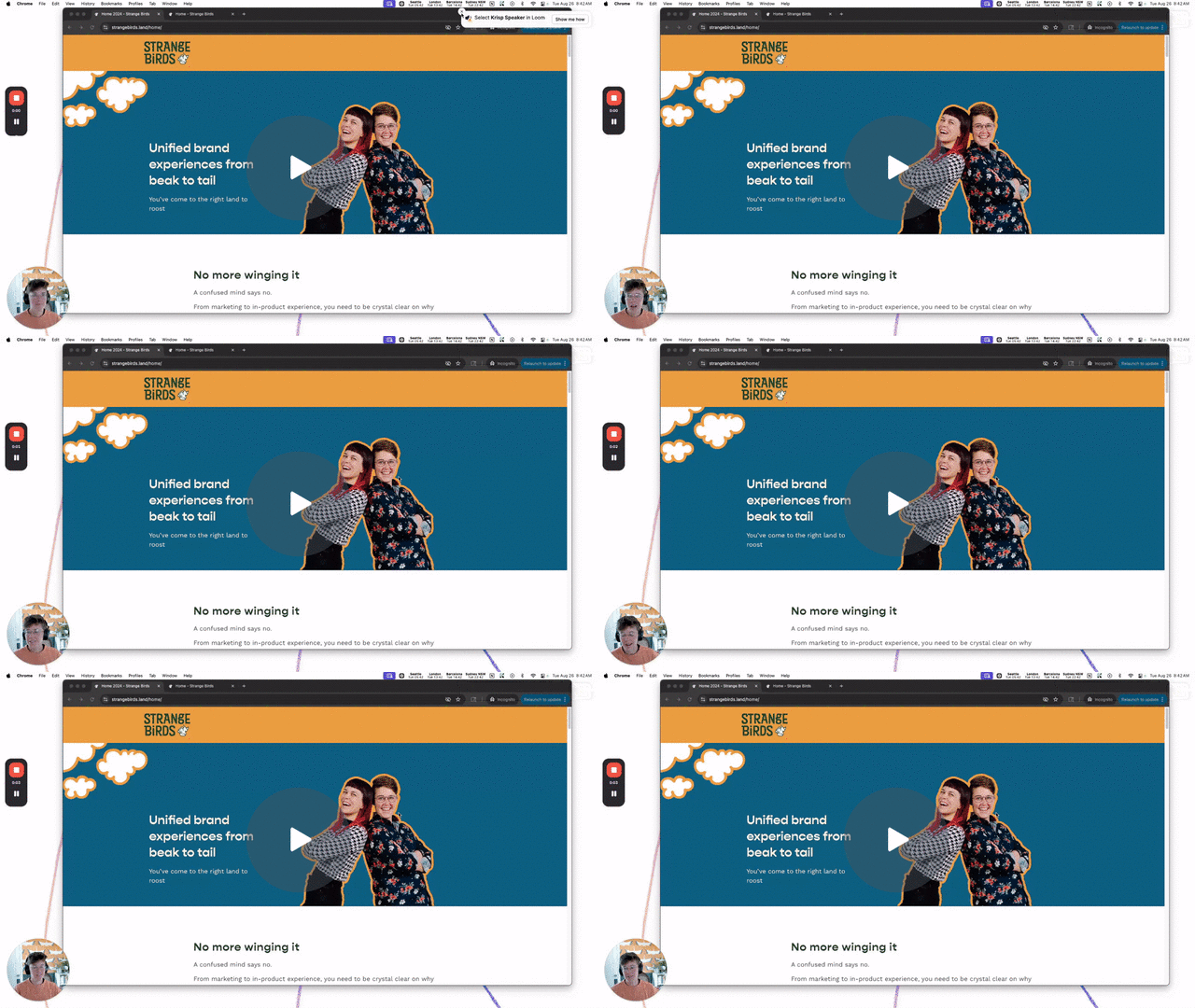
We obviously couldn’t do them all at once. We’d incite existential crisis number 7. Here’s what we decided to focus on:1️⃣ New websiteWe needed a website that showed off our skills, was incredibly clear, and sounded like us. A website is your digital home. It’s where leads go to learn more about you. You HAVE to have a clear home for your business. Ours was woefully outdated. And we’d even gotten feedback that it was confusing to our leads, which is WAY not good. So we rewrote it! Or better yet, watch this video as I do a side-by-side of what we changed, how it flows, and how it talks more directly to solving pain points/proving we can help vs how we work.
2️⃣ Update and post on LinkedIn moreJanel went and got a Publer account and hot dang have you noticed how much she’s been posting? And the posts are all real good? And clear? Yeah. It’s because they actually know what to write about. Plus, writing posts and scheduling them gives her more confidence to brag about our results, our work, and our clients. They're killing it and already got us a lead. Boooooooom. 3️⃣ Reach out to stale leads and see if our new angle hooks ‘emJanel’s great at posting at LinkedIn and reaching out to potential leads that way. I’m much better in person. I started reaching out to old leads and old clients and have been drinking LOTS of coffee lately. The coffee dates have two goals: One is more message testing. Janel is testing out the new messaging at scale on LinkedIn. I am gathering info on people’s reactions to it when I share it live. The overwhelming response is “ohhhh that’s good yes.” The second is reengaging with colleagues. I’m at a stage in my career that I really should be way more involved in the business world in Columbus. I had some mentor coffees, discovered organizations I should join, and am once again reconsidering joining the local Chamber of Commerce. Maybe. Columbus is big enough to have plenty of work out there for us, and small enough that if you know someone, you know everyone. I know many someones, but I haven’t really tapped into everyone. If Strange Birds can get out there and become a more well-known agency (now that we know to call ourselves an agency), that’d be a huge boon. 4️⃣ All of the other things will happen when they happenEverything else on our list is important. However! We know that they will happen naturally, and it’s not worth building a whole project around them.
Basically, we strategically chose the things on the list that would unlock the biggest bang for our buck. It’s easy to think DO IT ALL NOW. In fact, that’s where most companies go toward. It all needs done, so get it all done right now! However, it doesn’t need to be done all at once. There are a lot of benefits in sequencing your work. Doing the website, LinkedIn, and outreach to old leads meant we got to really practice our new messaging and make it become second nature to us. That meant writing proposals is super easy. Cold pitching will be easy. Case studies will be easy. If we had jumped right into cold pitching without building up some confidence first, we would’ve fallen flat on our faces. If you’re looking at big list of DO IT ALL NOW, try to discern what 1-3 activities would help the most while also making the other ones easier. That’s all folks! Our first big ol’ series How We Unclucked Our Messaging is now over! Janel’s taking the reins for our next series, kicking off next Tuesday: Building content systems that scale Aiming to include plenty of freebie take-home templates for this one! Help give this series some shape: What are your biggest Qs about creating tools and frameworks for content that amps up growth? Reply with your burning-est questions. Cheers, Anna (they/them) 🏳️⚧️✊🏳️🌈✊🇵🇸 How We Unclucked Our Messaging series
What I'm reading Unmasking Autism: Discovering the New Faces of Neurodiversity by Devon Price Highly recommended by many people, I'm finally digging into this. I have a lot of autistic friends and family members and needed a deeper understanding of autism. This book is comprehensive, emotional, and incredibly thoughtful. Which is no surprise, because Dr. Price is brilliant and I've read all of his other books. Read it. It doesn't matter if you don't 'know' anyone with autism (you do, I guarantee it). Read it. |
Strange Birds
💌Sign up for Tuesday emails 💌 ✔️ business insights inspired by how moss grows ✔️lessons pulled from fantastical stories about magic in space ✔️metaphors that connect ultimate frisbee to being a business owner
Flying the Coop: EMMA Technology Cooperative "When you take infinite growth off the table, this entire world of possibilities opens up." — Ramsey Nassar, EMMA Technology Cooperative We make this show to learn things, ask good questions, and let really cool people shine (and maybe occasionally get a little clever ourselves). This conversation did something different: it reminded us that what we're building isn't just a business model. It can be radical. And maybe it should be. 📖👀 Prefer...
Part five: conclusion Y’all ready for the final installment of marketing funnels are silly? I am! This one has been fun to write. I do apologize for it coming out with long breaks between installments. Life got in the way, but that happens! And ironically, something a lot of funnel tactics don’t account for. (I’m looking at you, countdown timers) What we’ve learned so far: Balancing company- and customer-centered needs when you make sales and marketing decisions is critically important...
Part four: creating a system that works for you Cool. So. So! So far in this series, you have seen the light about marketing funnels. They are nice and pretty BUT they are a failed attempt to simplify something deeply complex. They force organizations to make company-centered instead of customer-centered decisions. They create tunnel vision, causing people to miss or flat-out ignore signals customers are sending that say WE WANT THIS. All of this is because humans are chaotic. Your job in all...